
Loading shoe lifespan
Loading shoe lifespan
~550 km
Expected lifespan, based on hand-researched wear data for this model.
Got a pair? Check how much life is left.
Free, 4 quick questions with this shoe pre-selected. Wear percentage, km remaining, and what your pair is worth.
Check your Gt 1000 13 →No Gt 1000 13 listed right now.
Be first in line — we'll email you the moment a pair in your size lists.
The shoe uses AHAR rubber on the outsole, known for its long-lasting properties, and the engineered mesh upper is reported as more durable than previous versions. Both lab tests and user feedback indicate above-average durability for the price point, with minimal wear reported after extended use.
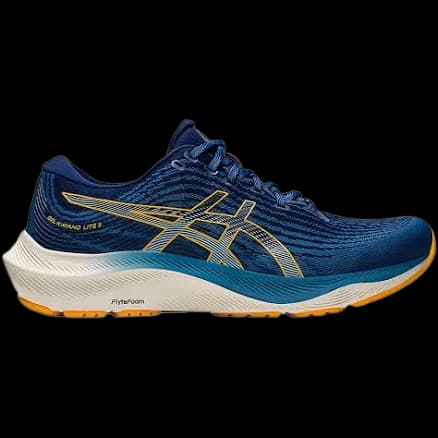
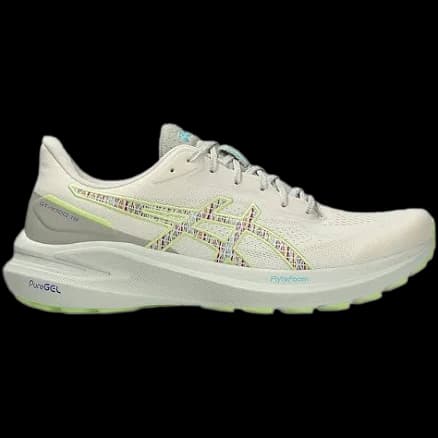
The Asics GT 1000 13 is widely regarded as a reliable, budget-friendly stability shoe best suited for daily training and recovery runs. Its FlyteFoam midsole and PureGEL technology provide soft landings and moderate cushioning, making it comfortable for everyday miles and easy efforts. The 3D Guidance System offers adaptive stability, supporting mild to moderate overpronators, but the shoe is not overly intrusive for neutral runners. However, the shoe lacks energy return and responsiveness, limiting its effectiveness for tempo runs and racing, where a snappier ride is preferred. For long runs, the cushioning is adequate but not plush or energetic enough for most runners to recommend it as a primary marathon shoe. The outsole performs well on dry pavement but has subpar traction on wet surfaces and is not designed for trails, making it a poor choice for off-road use. User and expert feedback consistently highlight comfort for easy and moderate paces, but note drawbacks such as a bulky heel collar and less-than-ideal lacing system.
Ideal for Best suited for beginner to intermediate runners or walkers who need moderate stability for mild overpronation, prefer a cushioned yet supportive shoe for daily training, and value durability and comfort over maximum energy return or race-day speed.
Short laces can cause tightness at the top of the lacing system. Excess cushioning in the tongue and heel collar may be uncomfortable for some. The shoe is designed for overpronators and provides APMA-accepted arch support. The upper is breathable and durable, but the overall fit is best described as accommodating rather than precision-locked.
Sizing: Fits true to size for most runners; available in multiple widths in some markets. No need to size up or down for the majority of users, but the shoe is slightly roomier than average in width.
Daily Trainer shoes in NORMA's database last between 320 and 800 km across 694 models. At 550 km, the Asics Gt 1000 13 sits in the lower half of that range.
The ASICS GT 1000 13 is a versatile stability trainer that balances comfort, support, and durability at an accessible price point. Its non-intrusive stability system and plush cushioning make it a dependable choice for daily miles, though runners seeking a lively, energetic ride may find it lacking in responsiveness. Ideal for those who prioritize support and value over speed.
Full specs, fit notes, and reviews on the Asics Gt 1000 13 wiki page.
NORMA's marketplace is UK-only today. Tell us where you are and we'll let you know the moment we open your region.
The Asics Gt 1000 13 lasts about 550 km, based on hand-researched wear data for this model. Your own mileage shifts with body weight, running surface, and how you use the shoe.
Start checking for wear around 330 km (60% of its lifespan). By 440 km the foam and outsole are usually noticeably degraded, and most runners retire the shoe between there and 550 km.
Daily Trainer shoes in NORMA's database range from 320 to 800 km across 694 models. At 550 km, the Asics Gt 1000 13 sits in the lower half of that range.
Often, yes. A pair with under 60% wear (roughly 330 km) still has real training life left. NORMA lists second-rotation running shoes with transparent, verified mileage so you know exactly how much life you're buying.