

Lifespan: Salomon Drx Defy
~430 km~267 mi
Add the km they've run to start the count.Add the miles they've run to start the count.
See full data on the Drx Defy
Buy, track or sell
No Drx Defy listed right now.
Be first in line — we'll email you the moment a pair in your size lists.
About the shoe
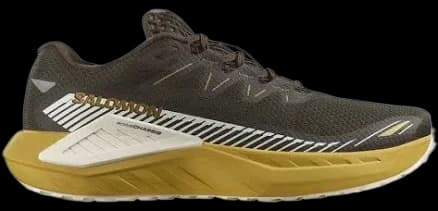
The Salomon DRX Defy is a lightweight, stable road-to-trail shoe that shines on gravel, roads, and light trails. Its balanced cushioning and subtle support make it a strong choice for runners seeking comfort and versatility for daily miles, though those wanting a highly responsive or flexible ride may find it less suitable.
Reviewers highlight solid build quality, with the shoe holding up well on mixed terrain and showing minimal early wear. The outsole and upper materials are robust, and the shoe is designed for both road and light trail use, suggesting good longevity for its intended purpose. No major durability complaints were noted in professional or user reviews.
Full specs, fit notes, and reviews on the Salomon Drx Defy wiki page.
Specs
242 g · 8 mm drop
Norma rating
8.2/10
The Salomon DRX Defy is widely regarded as a versatile, lightweight road-to-trail shoe best suited for daily training, easy runs, and light to moderate trail use. Experts highlight its balanced cushioning (not max-cushion), moderate stack height (35-36mm), and stability features, making it comfortable for everyday miles and recovery runs, especially for heel strikers or those needing mild support. Its EnergyFOAM midsole is soft but not highly responsive, so it excels at easy/moderate paces but lacks the bounce and propulsion for tempo runs or racing compared to dedicated performance shoes. The outsole provides good traction for gravel, hardpack, and moderate trails, but is not aggressive enough for technical or muddy terrain. While it can handle longer efforts, most reviewers and users note it feels best for shorter to mid-distance runs, as the cushioning and ride may feel flat or firm over marathon distances. The shoe is not recommended for competitive racing or technical trail running, but is a strong choice for door-to-trail, base building, and recovery days.
- Versatile traction and stability make it ideal for mixed surfaces, excelling on both roads and light to moderate trails
- Lightweight construction and balanced cushioning provide comfort for daily training and longer efforts without feeling bulky
- Supportive chassis and guidance system offer mild pronation control, benefiting runners who need extra stability without intrusive correction
- Midfoot and forefoot responsiveness is limited, making the shoe less lively for runners who prefer a more energetic toe-off
- Stiffness in the upper and chassis can cause discomfort on sharp turns or uneven terrain, and may require a short break-in period
Best for and fit
Daily training
Ideal for Best suited for beginner to intermediate runners who prioritize comfort, mild stability, and versatility for daily training on roads, gravel, and light trails. Ideal for those with a heel-striking gait or mild pronation who want a reliable, no-fuss shoe for easy to moderate mileage.
The DRX Defy Grvl is designed as a hybrid for gravel and light trail, offering a balance of support and comfort. The fit is secure in the heel and midfoot, with a slightly more accommodating toebox than traditional Salomon trail shoes. The shoe provides mild stability without feeling overly controlling, making it suitable for runners needing light support on mixed terrain. The upper is engineered for adaptable comfort, and the midsole offers a responsive, slightly bouncy ride. Not recommended for runners seeking maximal cushioning or a highly flexible, natural foot movement experience.
Sizing: Generally true to size; no widespread reports of needing to size up or down. Fit is similar to other recent Salomon road/trail hybrids, with a secure midfoot and standard length and width for most runners.
Against its category
560 km average348 mi average
Trail shoes in NORMA's database last between 180112 and 850 km528 mi across 444 models. At 430 km267 mi, the Salomon Drx Defy sits in the lower half of that range.
Other versions and similar shoes

Questions and guides
How many kilometres does the Salomon Drx Defy last?
The Salomon Drx Defy lasts about 430 km (267 miles), based on hand-researched wear data for this model. Your own mileage shifts with body weight, running surface, and how you use the shoe.
How many miles does the Salomon Drx Defy last?
About 267 miles (430 km), based on hand-researched wear data for this model.
When should I replace the Salomon Drx Defy?
Start checking for wear around 258 km (60% of its lifespan). By 344 km the foam and outsole are usually noticeably degraded, and most runners retire the shoe between there and 430 km.
How does the Salomon Drx Defy compare to other trail shoes?
Trail shoes in NORMA's database range from 180 to 850 km across 444 models. At 430 km, the Salomon Drx Defy sits in the lower half of that range.
Is a used Salomon Drx Defy worth buying?
Often, yes. A pair with under 60% wear (roughly 258 km) still has real training life left. NORMA lists second-rotation running shoes, and sellers can add the miles they logged, so you can see how much life is left.