

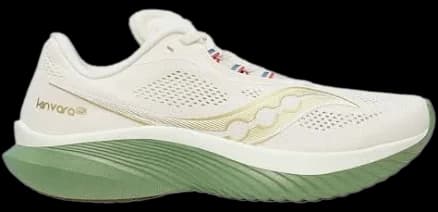
Lifespan: Saucony Kinvara 15
~560 km~348 mi
Add the km they've run to start the count.Add the miles they've run to start the count.
See full data on the Kinvara 15
Buy, track or sell
No Kinvara 15 listed right now.
Be first in line — we'll email you the moment a pair in your size lists.
About the shoe
The Saucony Kinvara 15 returns to its roots with a stripped-down, lightweight design that prioritizes ground feel and speed. Its flexible, low-profile build makes it a favorite for runners seeking a responsive shoe for tempo runs and daily training, though its minimal cushioning and outsole may not suit everyone. Best for those who appreciate a classic, no-frills trainer that encourages natural movement.
Durability is average due to the exposed foam outsole, which prioritizes weight savings over longevity. While the shoe holds up for typical training cycles, the minimal rubber coverage leads to faster wear, especially for heavy strikers or those running on abrasive surfaces. User and expert feedback consistently note this tradeoff.
Full specs, fit notes, and reviews on the Saucony Kinvara 15 wiki page.
Specs
200 g · 4 mm drop
Norma rating
8.5/10
The Saucony Kinvara 15 is widely praised for its exceptionally lightweight build (6.8 oz), flexible midsole, and low stack height, making it ideal for daily training, especially for runners who prefer a more natural, responsive ride. Its cushioning is sufficient for moderate distances and tempo runs, providing a snappy, ground-connected feel that excels at faster paces and structured workouts. However, the shoe's minimal outsole rubber and softer, thinner rubber compound limit its durability and comfort for extended long runs (15+ miles) and make it less suitable for marathon distances compared to more cushioned options. While some runners have used it for marathons, most experts recommend it up to the half marathon distance. The Kinvara 15 is not designed for trail running due to its exposed foam, limited traction, and low stack, though it performs adequately on well-groomed paths. For recovery runs, its lightness and flexibility are appreciated, but the firmer, more minimal cushioning may not provide the plush comfort some seek after hard efforts. Racing suitability is moderate: it's a solid choice for those who prefer a traditional, low-profile racing feel, but lacks the propulsion and cushioning of modern super shoes for competitive events.
- Exceptionally lightweight build promotes a natural, fast turnover and reduces fatigue on tempo or daily runs.
- Flexible midsole and low stack height offer excellent ground feel and encourage foot strength development.
- Breathable mesh upper and bootie-style fit keep feet cool and secure, minimizing distractions during runs.
- Responsive PWRRUN foam delivers a snappy ride ideal for uptempo workouts and faster efforts.
- Minimal outsole rubber and softer foam limit long-term durability, especially for high-mileage or abrasive surfaces.
- Lower cushioning and support make it less suitable for recovery runs, longer distances, or runners needing extra protection.
Best for and fit
Daily training
Ideal for Best suited for experienced runners or those transitioning to lower-drop shoes who value a lightweight, flexible trainer for tempo runs, intervals, and everyday mileage up to the half marathon. Ideal for forefoot or midfoot strikers seeking ground connection and natural movement, rather than maximum cushioning or support.
The Kinvara 15 maintains its lightweight, natural feel and is praised for comfort and breathability. The fit is secure in the heel and midfoot, with a roomy toebox. No stability elements or carbon plate; designed for neutral runners seeking a flexible, natural ride.
Sizing: Generally true to size; no widespread recommendations to size up or down. Fit is consistent with previous Kinvara models and typical Saucony sizing.
Against its category
600 km average373 mi average
Daily Trainer shoes in NORMA's database last between 320199 and 800 km497 mi across 653 models. At 560 km348 mi, the Saucony Kinvara 15 sits in the upper half of that range.
Other versions and similar shoes
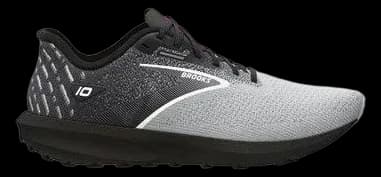
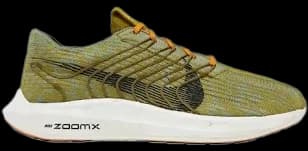
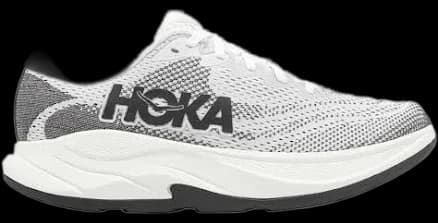
- Kinvara 11~560 km · 348 mi
- Kinvara 12~560 km · 348 mi
- Kinvara 13~560 km · 348 mi
- Kinvara 14~580 km · 360 mi
- Kinvara 15~560 km · 348 mi
- Kinvara 16~560 km · 348 mi
Questions and guides
How many kilometres does the Saucony Kinvara 15 last?
The Saucony Kinvara 15 lasts about 560 km (348 miles), based on hand-researched wear data for this model. Your own mileage shifts with body weight, running surface, and how you use the shoe.
How many miles does the Saucony Kinvara 15 last?
About 348 miles (560 km), based on hand-researched wear data for this model.
When should I replace the Saucony Kinvara 15?
Start checking for wear around 336 km (60% of its lifespan). By 448 km the foam and outsole are usually noticeably degraded, and most runners retire the shoe between there and 560 km.
How does the Saucony Kinvara 15 compare to other daily trainer shoes?
Daily Trainer shoes in NORMA's database range from 320 to 800 km across 653 models. At 560 km, the Saucony Kinvara 15 sits in the upper half of that range.
Is a used Saucony Kinvara 15 worth buying?
Often, yes. A pair with under 60% wear (roughly 336 km) still has real training life left. NORMA lists second-rotation running shoes, and sellers can add the miles they logged, so you can see how much life is left.