

Lifespan: Speedland Gs:Pgh
~630 km~391 mi
Add the km they've run to start the count.Add the miles they've run to start the count.
See full data on the GS:PGH
Buy, track or sell
No GS:PGH listed right now.
Be first in line — we'll email you the moment a pair in your size lists.
About the shoe
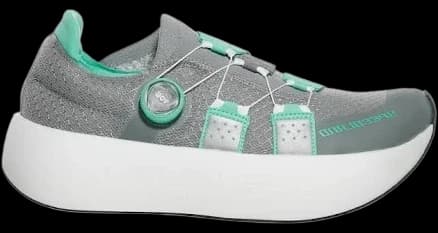
The Speedland GS:PGH stands out as a top-tier trail shoe, blending a customizable fit with outstanding grip and long-haul comfort. Its premium build and innovative features make it ideal for runners tackling technical terrain and demanding conditions. While the price is steep, the durability and performance justify the investment for serious trail enthusiasts.
Multiple testers report minimal to no outsole or upper wear after 40-50+ miles, even with mixed terrain use. The upper and outsole materials are described as robust, and the shoe is noted for holding up well under harsh conditions and heavy use.
Full specs, fit notes, and reviews on the Speedland Gs:Pgh wiki page.
Specs
298 g · 7 mm drop
Norma rating
9.6/10
The Speedland GS:PGH is widely regarded by experts and users as an elite trail running shoe, excelling in off-road conditions due to its outstanding traction, cushioning, and durability. Its Michelin outsole and high stack provide excellent grip and protection on a variety of surfaces, including mud, snow, rocks, and sand. The shoe's responsive midsole and rocker geometry make it suitable for long trail efforts and extended distances, offering comfort and impact absorption even on steep inclines and descents. However, its relatively high weight and firm foam (which softens after break-in) make it less ideal for tempo runs and racing compared to lighter, more aggressive models. The wide platform offers stability but can feel unwieldy in highly technical terrain for some runners, though larger or heavier runners may find this less problematic. For daily training, the GS:PGH is a strong option for those who primarily run trails, but its premium build and price may be excessive for easy recovery runs or those seeking a softer, more forgiving ride.
- Exceptional grip and stability on technical terrain, thanks to the Michelin outsole and aggressive lug pattern, providing confidence on everything from mud to slickrock.
- Highly customizable fit with a dual BOA system and a drop-in midsole that molds to your foot, resulting in a secure, personalized lockdown.
- Durable construction and premium materials ensure the shoe maintains performance and appearance even after extensive mileage, making it a long-term investment.
- Versatile cushioning—medium-soft, bouncy Pebax and HTPU midsole—offers both protection and comfort for long distances without feeling overly mushy.
- Premium price point is significantly higher than most trail shoes, which may not be justifiable for casual or infrequent trail runners.
- Initial break-in period required due to firm foam, and the shoe does not accommodate alternative insoles, limiting customization for orthotic users.
- Not fully optimized for wet or all-weather conditions, as there is no waterproof version currently available.
Best for and fit
Trail
Ideal for Experienced trail runners or ultra-distance athletes who prioritize fit customization, durability, and technical performance. Best suited for those tackling rugged, variable terrain and seeking a long-lasting, premium shoe for training or racing. Not ideal for beginners, road-only runners, or those needing orthotic compatibility.
The GS:PGH is an evolution of the GS:TAM, with a lighter, softer, and more responsive midsole. The fit is slightly improved over previous models, especially in comfort and lockdown. The shoe is designed for long-distance trail running and excels in technical terrain. The unisex sizing and customizable fit (via BOA) make it adaptable for a wide range of foot shapes, though extremely wide feet may find the midfoot snug. The carbon plate is not included by default but can be added for increased propulsion and protection.
Sizing: True to size; unisex sizing. Most testers and reviewers report no need to size up or down compared to standard running shoe sizing.
Against its category
560 km average348 mi average
Trail shoes in NORMA's database last between 180112 and 850 km528 mi across 444 models. At 630 km391 mi, the Speedland Gs:Pgh sits in the upper half of that range.
Other versions and similar shoes
Questions and guides
How many kilometres does the Speedland Gs:Pgh last?
The Speedland Gs:Pgh lasts about 630 km (391 miles), estimated from its category and specs. Your own mileage shifts with body weight, running surface, and how you use the shoe.
How many miles does the Speedland Gs:Pgh last?
About 391 miles (630 km), estimated from its category and specs.
When should I replace the Speedland Gs:Pgh?
Start checking for wear around 378 km (60% of its lifespan). By 504 km the foam and outsole are usually noticeably degraded, and most runners retire the shoe between there and 630 km.
How does the Speedland Gs:Pgh compare to other trail shoes?
Trail shoes in NORMA's database range from 180 to 850 km across 444 models. At 630 km, the Speedland Gs:Pgh sits in the upper half of that range.
Is a used Speedland Gs:Pgh worth buying?
Often, yes. A pair with under 60% wear (roughly 378 km) still has real training life left. NORMA lists second-rotation running shoes, and sellers can add the miles they logged, so you can see how much life is left.