

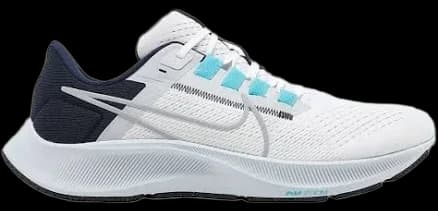
Lifespan: Nike Pegasus 38
~750 km~466 mi
Add the km they've run to start the count.Add the miles they've run to start the count.
See full data on the Pegasus 38
Buy, track or sell
No Pegasus 38 listed right now.
Be first in line — we'll email you the moment a pair in your size lists.
About the shoe
The Nike Air Zoom Pegasus 38 is a dependable daily trainer built for comfort and longevity, excelling on easy and moderate runs. Its plush cushioning and improved fit make it a standout for runners prioritizing durability and comfort over speed. While not the lightest or most responsive option, it remains a go-to for those seeking a reliable workhorse for everyday training.
The shoe's build quality is generally praised, with the React foam and outsole holding up well for most users. However, some report midsole creasing and compression over time, especially for heavier runners or those with sensitive forefeet, which may affect long-term comfort.
Full specs, fit notes, and reviews on the Nike Pegasus 38 wiki page.
Specs
289 g · 10 mm drop
Norma rating
8.0/10
The Nike Air Zoom Pegasus 38 is widely regarded by experts and users as an excellent daily trainer, praised for its comfort, durability, and balanced cushioning, making it ideal for everyday runs and base building. Its React midsole and Zoom Air unit provide enough cushioning for long runs, though some testers note it can feel less lively or slightly harsh on very long efforts, especially for midfoot strikers. For tempo runs, the shoe offers moderate responsiveness but is considered too soft and heavy for sustained faster paces compared to dedicated tempo or racing shoes. Racing suitability is limited due to its weight and lack of aggressive propulsion, though it can serve as a backup for non-competitive events or beginners. Trail running is not a strength; while the outsole can handle light gravel or park paths, it lacks the traction and protection needed for technical terrain. For recovery runs, the plush cushioning and stable ride make it a strong choice, with many users and reviewers highlighting its comfort for easy, gentle miles.
- Plush cushioning delivers all-day comfort for easy and long runs, reducing post-run fatigue even over higher mileage
- Wider forefoot and improved upper fit accommodate a broader range of foot shapes, enhancing lockdown and reducing pressure points
- Durable outsole and robust build quality make it a reliable choice for runners seeking a shoe that can handle extensive training mileage
- Heavier and less responsive than previous Pegasus models, making it less suitable for faster workouts or race days
- Breathability is limited due to the padded upper, which can cause the shoe to feel warm during longer or hotter runs
Best for and fit
Daily training
Ideal for Best suited for beginner to intermediate runners seeking a comfortable, neutral trainer for easy runs, recovery days, and steady mileage. Ideal for those who value durability and a secure fit over maximum speed or race-day performance.
The Pegasus 38 is designed as a versatile daily trainer with a balanced fit that accommodates a wide range of foot shapes. The upper is softer and more breathable than the previous version, and the separate, more padded tongue improves comfort across the instep. The shoe does not include stability elements or a rocker geometry, focusing instead on a traditional, neutral ride. Flexibility is moderate, allowing for natural foot movement without feeling overly stiff or floppy.
Sizing: Generally true to size for most runners. The Pegasus 38 returns to a fit similar to earlier models (Pegasus 34/35) with more room in the toebox compared to the narrower Pegasus 37. Most expert and user reviews recommend ordering your usual running shoe size unless you have a particularly wide foot, in which case the available wide (2E) option is suggested.
Against its category
600 km average373 mi average
Daily Trainer shoes in NORMA's database last between 320199 and 800 km497 mi across 653 models. At 750 km466 mi, the Nike Pegasus 38 sits in the upper half of that range.
Other versions and similar shoes
- Pegasus 35~720 km · 447 mi
- Pegasus 36~720 km · 447 mi
- Pegasus 37~750 km · 466 mi
- Pegasus 38~750 km · 466 mi
- Pegasus 39~750 km · 466 mi
- Pegasus 40~720 km · 447 mi
- Pegasus 41~640 km · 398 mi
Questions and guides
How many kilometres does the Nike Pegasus 38 last?
The Nike Pegasus 38 lasts about 750 km (466 miles), based on hand-researched wear data for this model. Your own mileage shifts with body weight, running surface, and how you use the shoe.
How many miles does the Nike Pegasus 38 last?
About 466 miles (750 km), based on hand-researched wear data for this model.
When should I replace the Nike Pegasus 38?
Start checking for wear around 450 km (60% of its lifespan). By 600 km the foam and outsole are usually noticeably degraded, and most runners retire the shoe between there and 750 km.
How does the Nike Pegasus 38 compare to other daily trainer shoes?
Daily Trainer shoes in NORMA's database range from 320 to 800 km across 653 models. At 750 km, the Nike Pegasus 38 sits in the upper half of that range.
Is a used Nike Pegasus 38 worth buying?
Often, yes. A pair with under 60% wear (roughly 450 km) still has real training life left. NORMA lists second-rotation running shoes, and sellers can add the miles they logged, so you can see how much life is left.