

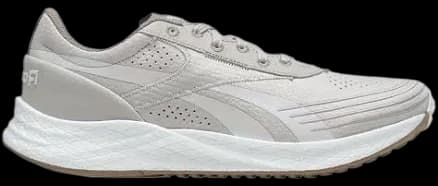
Lifespan: Reebok Floatride Energy
~570 km~354 mi
Add the km they've run to start the count.Add the miles they've run to start the count.
See full data on the FloatRide Energy
Buy, track or sell
No FloatRide Energy listed right now.
Be first in line — we'll email you the moment a pair in your size lists.
About the shoe
The Reebok Floatride Energy stands out as a budget-friendly daily trainer that balances cushioning, responsiveness, and versatility for road and light trail use. While it excels in comfort and energy return for everyday runs, those seeking plush cushioning for high-mileage training may want to look elsewhere. Its lightweight feel and adaptable grip make it a strong choice for runners who value simplicity and value.
The outsole and heel materials are durable and provide good longevity for the price, with most users reporting the shoe lasts a full season of running. However, the mesh toebox is notably less robust, scoring poorly in standardized abrasion tests, which may lead to premature wear in that area for some users.
Full specs, fit notes, and reviews on the Reebok Floatride Energy wiki page.
Specs
254 g · 9 mm drop
Norma rating
8.2/10
The Reebok Floatride Energy series is widely regarded by experts and users as an outstanding budget-friendly daily trainer, praised for its responsive Floatride Energy foam, smooth ride, and versatility for a range of paces and distances. It excels at daily training due to its balance of cushioning, stability, and lightweight feel, making it suitable for most runners' everyday needs. For long runs, it performs well up to moderate marathon training distances, but some reviewers note it lacks the plushness and protection of premium long-distance shoes for efforts beyond 2-3 hours or 15+ miles. The shoe's energetic midsole and moderate weight make it capable for tempo runs, though it doesn't match the snappiness or propulsion of dedicated tempo or racing shoes. For racing, it's serviceable for recreational runners in 5K to marathon events, but competitive athletes may prefer lighter, plated, or more responsive models. Trail running is not a strong suit for the standard Floatride Energy due to limited traction and protection, though the 'Adventure' variant improves off-road capability. For recovery runs, its cushioning and smooth transition make it a comfortable, gentle option, though not as soft as maximalist recovery shoes.
- Lightweight build makes daily runs feel effortless and reduces fatigue on short to mid-distance outings
- Responsive Floatride Energy foam delivers a lively, balanced ride that suits both new and experienced runners
- Versatile outsole provides reliable grip on roads and light trails, expanding training options beyond pure pavement
- Breathable mesh upper keeps feet cool and comfortable, even during warmer weather or longer sessions
- Cushioning may feel insufficient for longer runs or heavier runners, leading to discomfort on extended efforts
- Upper durability is below average, with some users reporting early wear in the toebox after regular use
Best for and fit
Daily training
Ideal for Best suited for beginner to intermediate runners seeking a reliable, no-nonsense daily trainer for short to mid-distance runs (up to 10K). Ideal for those who prefer a lightweight, responsive shoe for road and occasional light trail use, and who prioritize value and versatility over maximum cushioning or premium materials.
The Floatride Energy is widely regarded as one of the most versatile daily trainers, praised for its balance of comfort, fit, and responsiveness. It suits a broad range of foot shapes and running styles, with a fit profile that is accommodating but not sloppy. No stability elements or rocker geometry; the shoe is designed for natural movement and neutral runners. Consistent positive feedback on fit from professional guides (RunningWarehouse, FleetFeet), expert reviewers (BelieveintheRun, DoctorsOfRunning), and user forums (Reddit r/RunningShoeGeeks).
Sizing: Generally true to size for most runners; some with wider feet may prefer a half size up. Compared to Nike Pegasus, fit is similar but slightly roomier in the toebox. Sizing advice from RunningWarehouse, FleetFeet, and user forums consistently recommend standard running shoe size.
Against its category
600 km average373 mi average
Daily Trainer shoes in NORMA's database last between 320199 and 800 km497 mi across 653 models. At 570 km354 mi, the Reebok Floatride Energy sits in the upper half of that range.
Other versions and similar shoes
Questions and guides
How many kilometres does the Reebok Floatride Energy last?
The Reebok Floatride Energy lasts about 570 km (354 miles), estimated from its category and specs. Your own mileage shifts with body weight, running surface, and how you use the shoe.
How many miles does the Reebok Floatride Energy last?
About 354 miles (570 km), estimated from its category and specs.
When should I replace the Reebok Floatride Energy?
Start checking for wear around 342 km (60% of its lifespan). By 456 km the foam and outsole are usually noticeably degraded, and most runners retire the shoe between there and 570 km.
How does the Reebok Floatride Energy compare to other daily trainer shoes?
Daily Trainer shoes in NORMA's database range from 320 to 800 km across 653 models. At 570 km, the Reebok Floatride Energy sits in the upper half of that range.
Is a used Reebok Floatride Energy worth buying?
Often, yes. A pair with under 60% wear (roughly 342 km) still has real training life left. NORMA lists second-rotation running shoes, and sellers can add the miles they logged, so you can see how much life is left.