

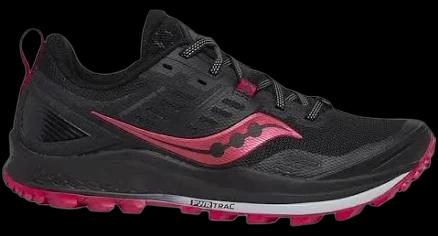
Lifespan: Saucony Peregrine 10
~560 km~348 mi
Add the km they've run to start the count.Add the miles they've run to start the count.
See full data on the Peregrine 10
Buy, track or sell
No Peregrine 10 listed right now.
Be first in line — we'll email you the moment a pair in your size lists.
About the shoe
The Saucony Peregrine 10 is a versatile trail shoe that excels in traction and agility, making it a favorite for technical terrain and variable conditions. Its responsive cushioning and protective features allow runners to tackle everything from muddy singletrack to rocky climbs with confidence, though the snug heel may not suit every foot shape.
The Peregrine 10 is praised for its robust build, reinforced upper, and durable outsole with aggressive lugs. Reviewers note excellent longevity and minimal wear even after extensive use on rough terrain. The rock plate and quality materials contribute to its high durability.
Full specs, fit notes, and reviews on the Saucony Peregrine 10 wiki page.
Specs
303 g · 4 mm drop
Norma rating
8.5/10
The Saucony Peregrine 10 is widely regarded by experts and users as an outstanding trail running shoe, excelling in off-road conditions due to its aggressive 5mm lugs, sticky PWRTRAC outsole, and robust rock plate, which provide top-tier traction and protection on technical terrain. Its moderate weight (10.7 oz men’s, 9.3 oz women’s) and responsive PWRRUN cushioning make it suitable for daily trail training and moderate-distance runs, but it is not as plush or soft as dedicated long-distance or recovery shoes, limiting comfort for extended efforts or easy days. The shoe’s nimble, flexible ride and improved fit over previous versions support tempo efforts on trails, but its weight and protection level are less ideal for fast racing or road-based tempo work. While some users report heel fit issues, most find the shoe stable and secure for varied trail use. The Peregrine 10 is not optimized for road racing or high-speed efforts, but can be used for trail races up to the marathon distance for non-elite runners. Its versatility and durability make it a strong daily trail trainer, but less suitable for pure recovery runs or maximal-cushion long runs.
- Exceptional grip on a wide range of trail surfaces, thanks to aggressive, well-spaced lugs that shed mud and provide confidence on both climbs and descents
- Responsive PWRRUN cushioning balances trail feel with enough protection for longer runs without feeling overly stiff or heavy
- Breathable, streamlined upper with FormFit technology offers a secure, comfortable fit and improved drainage for wet conditions
- Heel fit can feel tight for some runners, potentially causing discomfort or pressure on longer outings
- Not as plush or cushioned as some maximalist trail shoes, which may be a drawback for those seeking maximum underfoot softness on ultra distances
Best for and fit
Trail
Ideal for Best suited for intermediate to advanced trail runners who value grip, agility, and ground feel over maximal cushioning. Ideal for those tackling technical trails, variable weather, and distances up to the marathon range, especially runners who appreciate a secure, performance-oriented fit.
The Peregrine 10 features a redesigned upper and midsole compared to previous versions, resulting in a firmer, more responsive ride. The fit is secure and performance-focused, especially in the heel and midfoot, which may not suit runners with wide feet or those preferring a relaxed fit. The shoe excels in technical terrain due to its lockdown and protection, but the firmer cushioning may feel harsh on long, hard surfaces. No carbon plate or pronounced rocker geometry is present.
Sizing: Generally true to size for most runners; some users and reviewers note a slightly snug fit, especially in the heel and midfoot. Those with wider feet may find it tight and could consider trying a half size up or the wide version if available.
Against its category
560 km average348 mi average
Trail shoes in NORMA's database last between 180112 and 850 km528 mi across 444 models. At 560 km348 mi, the Saucony Peregrine 10 sits in the upper half of that range.
Other versions and similar shoes
- Peregrine 10~560 km · 348 mi
- Peregrine 11~560 km · 348 mi
- Peregrine 12~560 km · 348 mi
- Peregrine 13~580 km · 360 mi
- Peregrine 14~560 km · 348 mi
- Peregrine 15~560 km · 348 mi
Questions and guides
How many kilometres does the Saucony Peregrine 10 last?
The Saucony Peregrine 10 lasts about 560 km (348 miles), based on hand-researched wear data for this model. Your own mileage shifts with body weight, running surface, and how you use the shoe.
How many miles does the Saucony Peregrine 10 last?
About 348 miles (560 km), based on hand-researched wear data for this model.
When should I replace the Saucony Peregrine 10?
Start checking for wear around 336 km (60% of its lifespan). By 448 km the foam and outsole are usually noticeably degraded, and most runners retire the shoe between there and 560 km.
How does the Saucony Peregrine 10 compare to other trail shoes?
Trail shoes in NORMA's database range from 180 to 850 km across 444 models. At 560 km, the Saucony Peregrine 10 sits in the upper half of that range.
Is a used Saucony Peregrine 10 worth buying?
Often, yes. A pair with under 60% wear (roughly 336 km) still has real training life left. NORMA lists second-rotation running shoes, and sellers can add the miles they logged, so you can see how much life is left.