
Loading shoe lifespan
Loading shoe lifespan
~560 km
Expected lifespan, based on hand-researched wear data for this model.
Got a pair? Check how much life is left.
Free, 4 quick questions with this shoe pre-selected. Wear percentage, km remaining, and what your pair is worth.
Check your Peregrine 11 →No Peregrine 11 listed right now.
Be first in line — we'll email you the moment a pair in your size lists.
Durability is a standout feature, with reviewers consistently praising the robust build, protective upper, and outsole longevity. The shoe handles rough terrain well, though excessive use on rocky surfaces or roads may accelerate wear on the lugs.
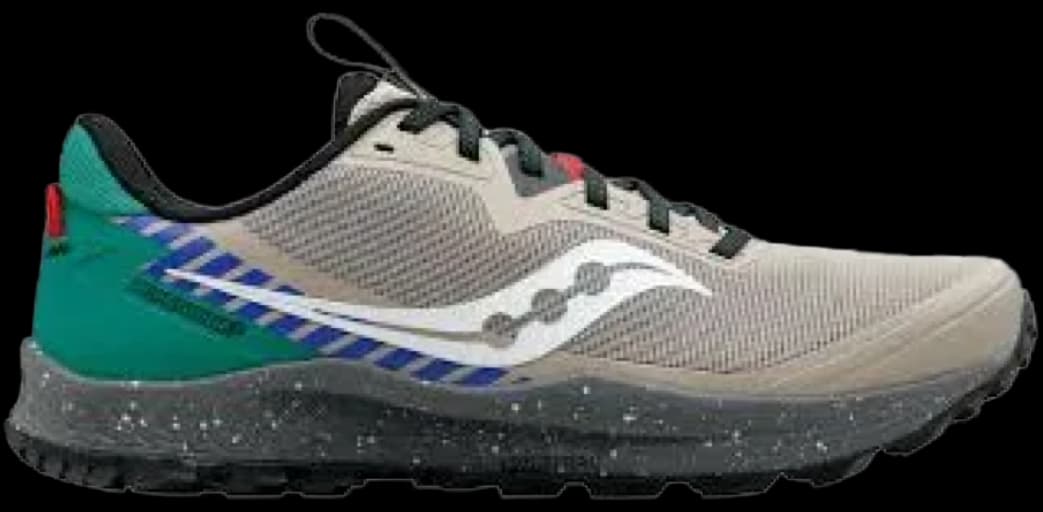
The Saucony Peregrine 11 is widely regarded by experts and users as a highly capable trail running shoe, excelling in off-road conditions, technical terrain, and wet or muddy environments due to its aggressive lugs and durable construction. Its stiff ride, moderate cushioning, and secure grip make it ideal for short to moderate trail runs, especially where traction and protection are priorities. However, the firmness and lack of plush cushioning limit its comfort for long runs (15+ miles) and recovery runs, as many users report foot fatigue after several miles. The shoe's weight and stiffness also make it less suitable for tempo runs and racing compared to lighter, more responsive options. While some use it for daily trail training, its best use is clearly technical trail running, not road or hybrid use. User feedback consistently praises its grip and stability but notes that it is not energetic or soft enough for extended or fast-paced efforts.
Ideal for Best for intermediate to advanced trail runners who tackle technical, rocky, or muddy terrain and prioritize grip and protection over softness or speed. Ideal for those training or racing on challenging trails, not for runners seeking maximum cushioning or a lightweight, flexible ride.
The Peregrine 11 is praised for its secure fit and trail-ready lockdown, especially in the midfoot and heel. The shoe is relatively stiff, which enhances protection and stability on technical terrain but reduces ground feel and flexibility. The toebox is average in width, suitable for most but not ideal for runners needing extra toe splay. No stability elements for overpronation; best for neutral runners. No carbon plate or rocker geometry present. Some users with narrow feet may find the fit slightly generous, while those with wide feet may find the midfoot snug.
Sizing: Fits slightly large for some; most users and expert reviewers recommend true to size, but a minority suggest considering a half size down if between sizes or preferring a snug fit.
Trail shoes in NORMA's database last between 320 and 850 km across 315 models. At 560 km, the Saucony Peregrine 11 sits in the lower half of that range.
The Saucony Peregrine 11 is a classic, no-nonsense trail shoe built for runners who prioritize traction and protection on rugged terrain. Its aggressive outsole and robust upper excel on technical trails, while the responsive cushioning offers a stable, confident ride. Best suited for those who value durability and grip over plush comfort or minimal weight.
Full specs, fit notes, and reviews on the Saucony Peregrine 11 wiki page.
NORMA's marketplace is UK-only today. Tell us where you are and we'll let you know the moment we open your region.
The Saucony Peregrine 11 lasts about 560 km, based on hand-researched wear data for this model. Your own mileage shifts with body weight, running surface, and how you use the shoe.
Start checking for wear around 336 km (60% of its lifespan). By 448 km the foam and outsole are usually noticeably degraded, and most runners retire the shoe between there and 560 km.
Trail shoes in NORMA's database range from 320 to 850 km across 315 models. At 560 km, the Saucony Peregrine 11 sits in the lower half of that range.
Often, yes. A pair with under 60% wear (roughly 336 km) still has real training life left. NORMA lists second-rotation running shoes with transparent, verified mileage so you know exactly how much life you're buying.